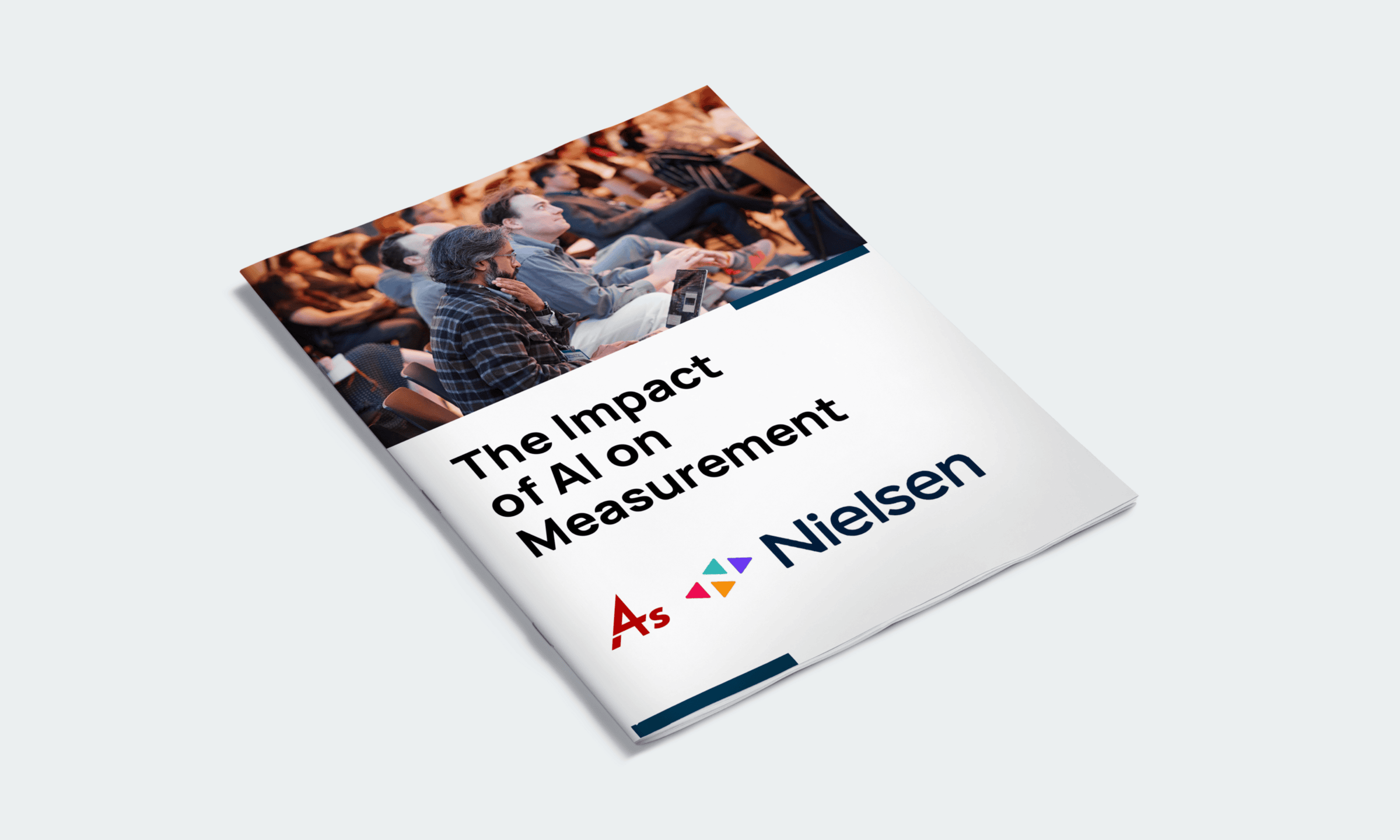

On February 11, Decisions DC delivered actionable insights to a room full of agency leaders focused on what’s next. Across sessions spanning automation, federal-state regulation, healthcare privacy, content transparency and ad tech infrastructure, one signal was unmistakable: AI is evolving from the role of a creative enhancement tool to the operating system of the agency business. This shift is architectural. Foundational. Structural.
The conversation has moved beyond prompts and productivity gains. AI is now being embedded into workflow routing, compliance review, media optimization, data orchestration and infrastructure design. It is beginning to govern how agencies function.
In many ways, this moment builds directly on the 4As 2026 Look Ahead conversations. The Look Ahead surfaced structural tensions around AI acceleration, margin compression, regulatory uncertainty and the evolving definition of partnership. Decisions 2026 confirmed that those tensions have now evolved from being emerging trends to operational realities.
The Look Ahead mapped the terrain. Decisions 2026 marked the route.
Here are six key themes that emerged from the DC edition of the conference held on February 11, and what they mean for agency martech and ad tech leaders building the Next Agency Now
#1 Automation Is the Foundation. It’s More Than a Feature.
Before agencies can deploy agentic AI systems, they must confront a simpler reality: most workflows were not designed for machines. AI only amplifies operational chaos. Campaign naming conventions, reconciliation processes, asset governance and performance tracking all determine whether AI orchestration adds value or accelerates risk. Operational modernization is now strategic leverage. Agencies that control their workflows control their AI future.
“Really strong automation is what powers really strong AI outputs, and we’re not going to be able to even crack the AI thing if we can’t get the automation and the data structure down.” Molly Simons, MERGE
#2 The Shift From Generative to Agentic AI
The industry’s early AI focus centered on creative acceleration and asset production. That framing is already shifting. Agentic AI reallocates budgets, adjusts bids, triggers workflows and optimizes performance autonomously. This is now about architecting decision logic. When AI governs optimization, whoever owns orchestration controls margin flow. Agencies must define their orchestration strategy deliberately because tool adoption is no longer the differentiator.
“Rather than building dashboards, we build pipes. We build integrations to connect it all together. So the media company and the influencer agency and the social team and the 17 client teams and the partner agencies can all work in a unified system, looking at the same information, the same data, the same insights. Because ultimately, if we’re going to deliver value to our clients, that’s what it’s about.” – Michael Treff, Code and Theory
#3 Regulatory Fragmentation Is Accelerating
While federal AI standards remain uncertain, state-level legislation is advancing quickly, particularly around high-risk AI systems and sensitive data. Waiting for harmonization increases exposure. Governance must be embedded into creative, media and data workflows now and not retrofitted later.
“The greatest risk is waiting for some sort of uniform standard to develop. It’s not going to happen anytime soon. Your clients are already pressuring you through contracts, trying to get concessions and disclosures, shifting liability. So it’s important to have a plan, think this through now. If you wait, you’ll be behind the curve.” – Michael A. Signorelli, Partner, Venable LLP
#4 Transparency Is Becoming Structural
As public skepticism in algorithmic systems and corporate motives grows, disclosure of AI-generated content and transparency in targeting practices are becoming baseline expectations. Agencies must design transparency into their operating architecture and it is not enough to merely layer it on as a safeguard.
“There’s no true transparency unless you actually build on your own dataset and model. Otherwise, you really won’t know what’s going on.” – Joshua Lowcock, Quad
#5 Healthcare Is the Privacy Stress Test
Healthcare surfaced how quickly AI adoption can outpace regulatory modernization. Healthcare is not an isolated case. It previews how inferred and predictive data may be scrutinized across industries, which is why privacy-first AI design must extend beyond regulated sectors. Agencies should treat inferred data as sensitive by default.
“There’s the health data, the wellness data, then the inferred health data and we’re trying to figure out where the line is for each one of those and putting the data into various buckets. But the HIPAA protection only extends so far, which is why these state laws are really important. And they come in and they pick up a lot of the slack.” – Alex Glowatz, DeepIntent
#6 The Ad Tech Supply Chain Is at an Inflection Point
One of the most sobering conversations at Decisions 2026 focused on the economics of the digital supply chain. The numbers are stark.
“In the beginning, the supply chain cost about 1%. Today the ad tech tax is 51%.” – Bill Wise, Mediaocean
Over time, platforms, exchanges, verification vendors, data providers and optimization tools were layered into the ecosystem. While each solved a problem, together, they created fragmentation. Now AI is entering that same system and creates an opportunity to redesign it. If agencies simply layer agentic AI on top of existing complexity, they risk automating inefficiency. Only if they use AI to consolidate workflows, reduce intermediary friction and integrate systems intentionally, can they improve both performance and margin. “This is our do-over.”

What Agency Leaders Should Do in the Next 90 Days
Based on the key takeaways from Decisions DC, here are some practical, actionable steps for leaders:
- Conduct a Workflow Audit
Identify manual reconciliation points, inconsistent taxonomies and fragmented reporting structures. AI readiness begins with operational clarity. - Establish an AI Governance Council
Bring together legal, media, creative and data leaders to formalize AI usage standards, disclosure protocols and risk classification. - Rationalize the Tech Stack
Map overlapping tools and intermediary layers. Reduce complexity before layering AI orchestration on top. - Define Your Orchestration Strategy
Determine where your agency will own decision logic and where you will rely on platforms. Make that choice intentional. - Embed Transparency Upstream
Standardize AI disclosure practices now rather than reacting to enforcement pressure later. - Pressure-Test Privacy Exposure
Especially around inferred data and consumer-entered AI inputs. Anticipate spillover from healthcare standards.
Watch Sessions
Registered for the event? Or a 4As member?
Sign in to watch. Free. Use code DECISIONS2026DC
–
Not a member? Purchase on-demand. $25

Ashwini Karandikar leads the Media, Technology and Data practice at the 4As.