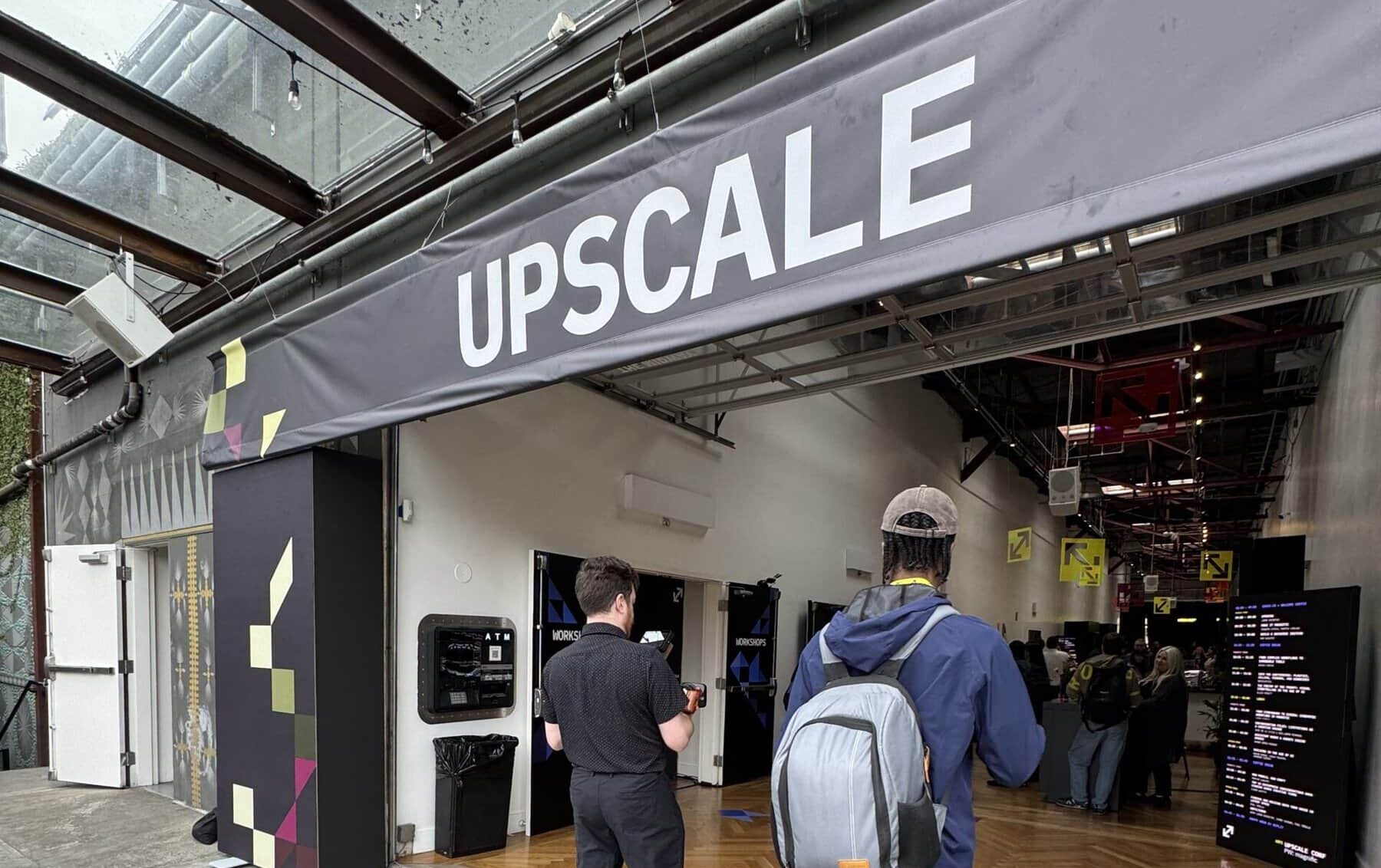
What Two Days at Upscale Conf Told Me About Where AI Creative is Going.
I just got back from two days at Upscale in San Francisco, surrounded by the people shaping the next decade of creative work: filmmakers, designers and the teams who build the tools themselves.
Here’s the first thing that hit me: nobody there was debating whether AI is coming for the creative industry. That argument is over for this crowd. It ended quietly sometime last year, and what’s left is a room full of people comparing notes on how they make things now.
Put that many makers in one place, and the patterns show up fast. These are the ones I can’t stop thinking about.
Taste is the New Skill
The biggest theme of the conference wasn’t a tool or a model. It was one idea that showed up in almost every talk, worded a little differently each time: now that anyone can generate, taste is what separates people.
Nik Kleverov, Chief Creative Officer at Native Foreign, put it most bluntly when he said that anyone can make content, but not everyone can tell a story. And Paul Trillo, Film Director & Co-Founder at Asteria Film Co, talked about something I haven’t been able to shake since, which is that these models pull everything toward the average. That’s just what they do, so if you’re not actively protecting your own voice, your work drifts toward everyone else’s without you noticing.
Think about what that does to a creative career. For twenty years, technical skill was the moat guarding the castle of creativity. That moat is draining now, and what’s left is judgment, which means knowing what’s good, knowing what to kill, and holding your point of view through attempt number 87 when the model keeps offering you something almost-right.
So, if you’re a creative wondering where to invest right now, it’s probably not another tool tutorial. It’s your eye.
Nobody Was Selling Single Images Anymore
The strongest work shown across both days had one thing in common, and it took me until day two to name it: none of it was a single piece. It was a world. Characters with their own rules, visual systems that held together across hundreds of assets, brand universes you could step into instead of posts you scroll past. Even the hands-on sessions pointed in the same direction of teaching character consistency across every image and video workflow, so the story holds from the first frame to the last.
This quietly changes what clients pay for. The deliverable stops being the campaign asset and becomes the world that produces those assets. Single pieces of content are about to be the cheapest thing in advertising, while the worlds behind them are about to be the most expensive part.
That’s where I’d be building. That’s where we are building.
Stop Pulling the Lever
Then Magnific got on stage and announced Agents, MCP, and Flows, and you could feel the room get it all at once.
Type a sentence, get an image, type again. That loop already feels old and slow, like pulling a slot machine lever and hoping. What’s replacing it is bigger: agents that handle entire jobs, tools that talk to each other, and workflows you design once and then run forever. The creative isn’t pulling the lever anymore. The creative is designing the machine.
I’ll be honest, this one felt personal. I’ve spent the past year building exactly these kinds of workflows inside our agency, mostly explaining to people why it mattered. Watching it be announced on a main stage was a little surreal. Partly validating, partly “okay, the window for this being a differentiator just got shorter.”
The creatives who win the next five years won’t be the fastest prompters. They’ll be the ones who can design the workflow, set the quality bar, and run the whole system the way a director runs a set.
Don’t Become “the AI Guy”
Henry Daubrez, Creative Director at Google Labs, offered a warning: don’t become the AI guy. It’s a strange thing to hear at an AI conference and also the smartest thing anyone said all week.
Right now, being the AI person on your team feels like an identity, but in two years it’ll mean about as much as being “the Photoshop guy,” because everyone will be one. The tools become normal. They always do. What lasts is being unmistakably yourself, which means a voice and a body of work that could only have come from you, where AI is how you made it and never why it matters.
And the proof was on stage. The people showing the best work at Upscale weren’t introduced as AI artists. They were introduced as filmmakers, designers, and storytellers. The tools didn’t even make the bio.
Where This Goes
The creative world is splitting into two layers. The bottom layer is endless, cheap, generated content that all looks the same. The top layer is worlds, voices, and systems run by people with real taste and the discipline to keep quality consistent at scale.
The scary version of this story is that AI replaces creatives. The real version is more interesting: AI replaces the busy work, and, in doing so, it reveals who actually had taste all along.
That’s the bet I’m making with my own work, and the bet we’re making at AbelsonTaylor Group. Less time pushing pixels, more time building worlds, designing systems, and trusting our judgment. We are now directing the story, not just making assets.
I’m still figuring out what kind of director I want to be. Grateful to be doing that figuring inside a place that’s willing to build alongside me.

David Osorio is an Art Director at AbelsonTaylor Group and an advocate for culturally grounded storytelling in the generative era. He combines creative strategy, visual design, and AI-enabled workflows to build scalable storytelling systems that balance innovation with authenticity. His work focuses on helping brands create meaningful, representative narratives that resonate across channels and audiences.