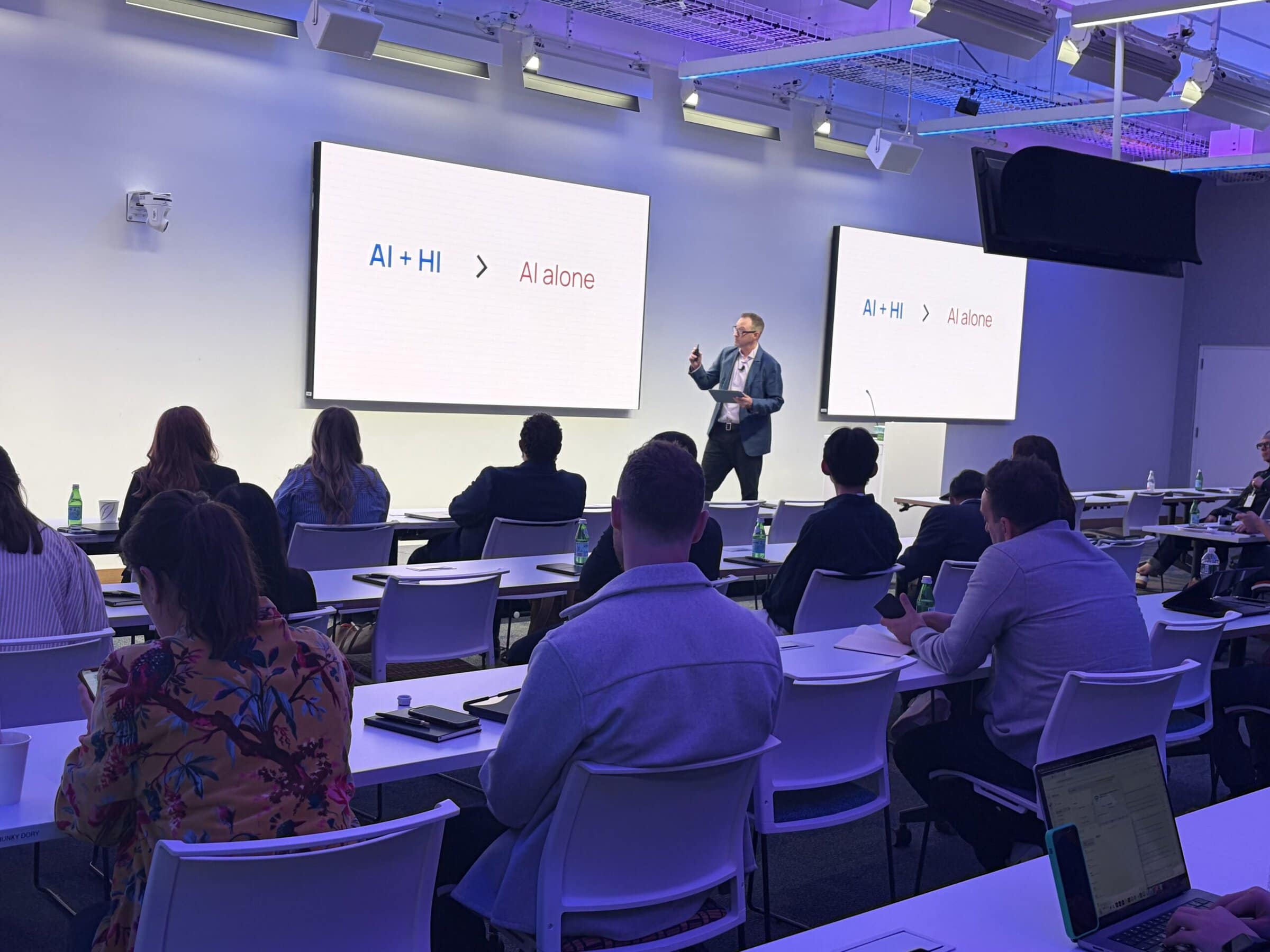
On Star Wars Day, agency leaders gathered to share perspectives on AI at Meta’s NYC offices in midtown Manhattan. The 4As convened independent shops, hold-co talent and platform builders for a frank conversation about AI in the agency business — what’s working, what’s hype and what’s about to break. The event traded in candor rather than consensus. Four themes carried across every session and read together, they sketch a coherent picture of where the industry is, and where we are heading.
Below is what I heard, framed for the people on the receiving end of these decisions: agency CEOs and COOs, marketing leaders at brands and the senior leadership teams trying to model the next eighteen months.
1. Pilots are starting to feel like procrastination.
Every speaker spent time describing the move from experimentation to operationalization.
Pedro Laboy of Brand Nexus put it this way: “AI transformation is 95% change management, 5% technology.”
Erinn Steffen of Mower walked through a multi-year journey that has now landed real production agents, including a Go/No-Go agent that gives the leadership team back 30 to 60 minutes of meeting time a day. Walrus’s Deacon Webster offered a useful counterweight: in his read, agentic AI is still “not enough juice for the squeeze” for many use cases, aligning with an emerging view that agentic is overhyped and under-delivering.
The message wasn’t to abandon pilots. It was to make sure they had an exit. Pilots earn their keep when they graduate to production workflows, when fluency shows up in performance reviews and when the reward system starts tracking outcomes rather than usage.
2. Tokens are the new line on the agency P&L; pricing has to follow.
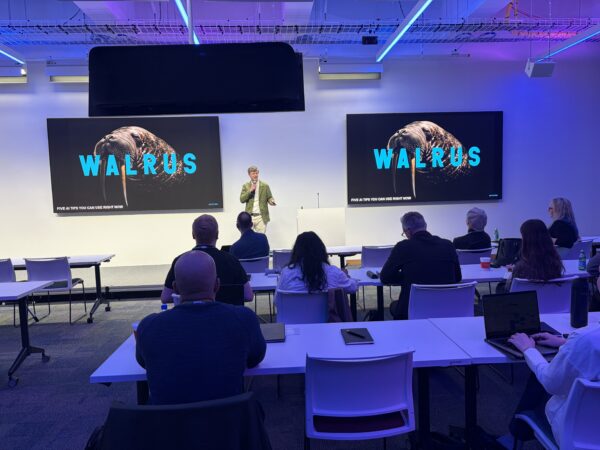
Multiple agency leaders agreed: tokens will soon become the second-largest cost behind people. Walrus pegged the number at ~$250-500 per employee per month, depending on role. MSQ’s Mark Starling framed the commercial squeeze plainly. Clients already expect fees to drop (“If you can spin up a prototype in the morning, why are services priced like last year?”), yet costs precede benefits and outcome-based pricing requires data clients are reluctant to share. Workday data cited from the stage put the hidden cost in starker terms — 29% of employees actively sabotage AI initiatives, a line item that doesn’t show up in any software invoice.
Pricing change is the hard part of this conversation and no one in the room pretended otherwise. The work this year is to start where shareable data exists, and for everything else, price the orchestration, tech, governance and brand judgment that AI cannot do for itself.
3. Brand clarity becomes the moat as AI averages everything.
Dave Gaines of Media by Mother made the brand argument clearly. As agentic search arrives, lower-funnel banner work loses meaning. Brands will increasingly be graded by LLMs on signals of eligibility (am I allowed to show up?) and signals of durable preference (do people actually love this? — currently sourced from online sources like Reddit at scale). Meta’s Dave Surgan and Walrus’s Deacon Webster reinforced the point from the creative side. AI tools default to the average, so creative diversity around one big idea becomes the durable defense. Webster’s warning on synthetic audiences sharpened the same edge: aggregating thousands of non-predictive responses, he noted, doesn’t make them predictive — “like bundling C and D mortgages and calling them A-rated.”
A new client KPI has been buzzing for months: did my brand surface in agentic search? The work of getting brand meaning, owned-media signals and creative architecture aligned needs to start before LLMs decide for the brand.
4. The value pool moves from outputs to orchestration and judgment.
The cheap, executional work is leaving the building. Anyone can spin up 2,000 banner variants in an afternoon. What becomes more important is model selection, IP and data governance, signal management, decisioning intelligence and the strategic counsel around it. Erinn Steffen mapped the workforce into four zones — automate the repeatable, human-in-the-loop agentic for judgment work, AI-supercharged for senior strategists and researchers operating at scale, and irreplaceable human for relationships, strategic counsel and deep expertise. Dave Gaines proposed a Netflix-style writers’ room of decisioning leads, signal managers and creative-systems managers. Kevin Olivieri of A&G showed the operational version: an in-house RFP builder where AI does 60–70% of the deck and humans take the storytelling.
Based on conversations across this day, the roles worth expanding this year may be signal and decisioning leads, AI orchestrators and content-governance owners, themes that we touched on in the 4As Look Ahead.
The bottom line
The shops that win the next eighteen months will be the ones that turn pilots into scaled deployments, re-price the work and rebuild around brand clarity and orchestration.
Erinn Steffen put it cleanly: “AI didn’t tell us what we are. It really forced us to decide.”

Jeremy Lockhorn spearheads several 4As GenAI resources such as the GenAI Blueprint, the GenAI Maturity Assessment Tool and more. These resources help member agencies navigate the opportunities and challenges in adopting and scaling GenAI and emerging tech. He speaks at 4As conferences and other industry events and writes about emerging tech in advertising, separating the hype from the real. Jeremy can be spotted interviewing agency leaders and innovative thinkers at events like CES and SXSW.