On an afternoon in April 2025, my partner and I held an offsite to assess our independent agency. Deep down a routine agenda of financial reviews sat a tiny sub-bullet: “potential rebranding.” That single line ate the day. We came in to talk about operations; we left having spent hours debating the name on our shop’s front door.
When a firm has been operating under the same moniker for nearly two decades, the work inevitably outgrows the shingles.
I bought our agency in 2009. The legacy name was Response, built in 2002 around print production and promotional marketing. Seventeen years later, our day-to-day reality was unrecognizable from that definition. We were architecting complex brand portfolios after enterprise acquisitions and building integrated brand systems for global hardware giants.
Yet, we were trapped in an identity pickle. On paper, we were thriving—deepening relationships so that over 80% of our revenue came from clients who trusted us across strategy, experience and campaigns simultaneously. We partnered with Logitech since before the first iPhone was even a sketch on a whiteboard, helping elevate the desktop peripherals company into a multibillion-dollar global enterprise brand across productivity, gaming, creator tools and video collaboration But because of our name, search consultants kept putting us in boxes we’d outgrown a decade ago. We were invited into briefs for work we didn’t do and excluded from pitches for work we did better than most. Even our deepest relationships were reading us smaller than we were.
A rebrand is an operational gauntlet that trade coverage typically flattens into a single, celebratory narrative. In reality, agency rebrands fall into three distinct categories, and conflating them is how most firms go wrong.
The Ugly: Cosmetic Trap
Most agency rebrands don’t break beyond the cosmetic barrier into strategic territory. They amount to a new logo, a fresh color palette and a vague manifesto written in active voice. What changed is that leadership got tired of the old visual identity, a new partner wanted to put their fingerprints on the firm, or the founders read a profile of a trendier shop and felt small.
The industry tolerates this because we sell identity, and any agency admitting its own positioning is unclear is suspect.
The ugly rebrand is what tempts every independent owner who has watched flashier studios collect headlines. That temptation is poison. The test I came back to: would we make this change if no one in the industry was watching? Years ago, we tried running this process like a client brief and ended up unable to agree on a direction. We weren’t ready. We were chasing optics, and the work hadn’t earned a new name yet.
The Good: Clarity That Forces Action
Why go through with the headache? Because the alternative is living inside an identity that actively misdirects your pipeline. Misalignment is an invisible tax that costs you the prospects you should be pitching and the talent who might join for the wrong reasons. The good of a rebrand is the clarity that forces action.
Over the last decade, we consciously narrowed our focus, turning down work outside our core verticals in deep-tech, enterprise and regulated industries. We prioritized institutional longevity over a revolving-door client roster.
When we finally committed to changing the name, it wasn’t to spark a transformation. It was to codify one that had already occurred. A good rebrand is never a promise of who you want to be tomorrow. It is an acknowledgment of who you already are.
The Bad: Operational Realities
The bad part of a rebrand is the grueling, unglamorous reality of execution.
First come client conversations. Most partners were gracious, but a few were candidly worried. One long-term client admitted that when he saw the calendar invitation for our announcement call, he braced for the worst—assuming we were being acquired or shutting down.
That told me everything. In a volatile landscape, “we have news” has a default negative reading. Fundamental fear trumps new creative direction on the client anxiety spectrum most days.
Then comes the logistical tax. You will spend far more hours than you expect on the slow drip of paperwork—from contracts and MSAs to vendor systems and payroll—every place your old corporate entity is encoded. We had to push our own launch timeline back twice just to clear the bureaucratic hurdles.
Finally, there is temporary disorientation. For months, you stop knowing exactly what to say when someone asks what your firm does. You are trapped between identities. That is a deeply strange, vulnerable place to sit for a company built on branding other businesses.
Beyond The Theater: Substances Versus Shingles
If you are considering an agency rebrand, the question to ask yourself is not whether your old name looks dated on a smartphone screen. The question is what has changed about the foundational math of your business that the old name no longer accounts for.
If you can’t answer that with specifics—with permanent shifts in your business metrics, structural changes in your capabilities and long-term client relationships that the old identity actively misrepresents—then you are playing in the cosmetic zone. Stop, wait and keep working.
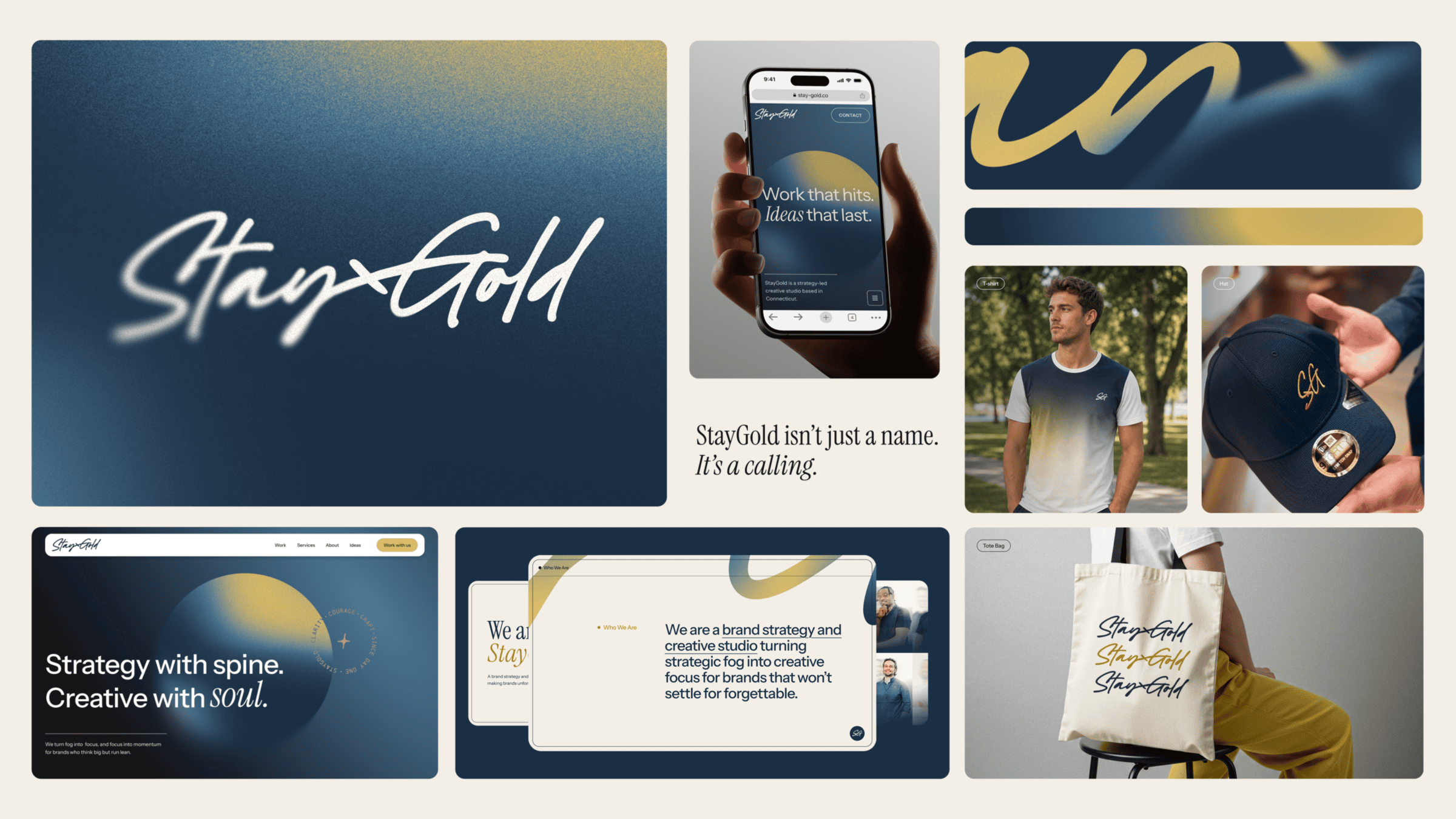
When we pulled the trigger, we ultimately chose a name—StayGold—that held us accountable to the reality we had already built. But the name itself matters less than the lesson: a rebrand is not a design exercise. It is an act of accountability. If you aren’t ready to defend the structural changes behind the new shingles, don’t do it. Everything else is just theater.

Carolyn Walker is the CEO of StayGold, where she leads teams and clients through high-stakes brand and growth challenges. Known for turning ambiguity into clear, actionable direction, she combines strategic rigor with real-world business insight. Her work has driven measurable impact for brands across industries and earned over 100 awards for marketing excellence.