A promising idea is easy to recognize once the finished work takes shape. But seeing its potential before it comes to life is where the real test of judgment lies.
At StratFest 2026, Madison Giller of Arnold Worldwide, who was also the Jay Chiat Emerging Strategist, 2025, explored the relationships that make that possible. A creative partner needs someone who understands the work, can see its potential and knows how to help others believe in it.
“Are you helping build belief in the weird idea before it’s fully formed?” she asked.
Part 1 explored where to look for signals. Here, we consider what an agency might need to change to own the shifts those signals suggest.
Build conviction while the idea is still taking shape
Giller’s Relationships > Robots session examined the craft around the brief: earning trust, giving useful feedback and helping creative partners develop something distinctive.
That can mean protecting an idea’s strongest attribute as it develops. It can also mean helping a client understand a possibility that initially feels unfamiliar.
The Gorilla Glue case brought that partnership into focus. Libby Kapsner of Betty, Tim Maleeny of Quad and Morgan Roberts of The Gorilla Glue Company described entrusting the brand’s familiar mascot with a bigger role as Chief Tough Officer.
The insights from these sessions suggest a practical discipline: understand what deserves to stay consistent, then help the team explore what it could become. Constructive feedback gives teams confidence in the direction while keeping possibilities open.
Put effort into the decision that matters; don’t over-strategize
Joe Burns of Quality Meats Creative challenged the assumption that more time necessarily produces better strategy. His session asked teams to examine what they are waiting for and whether further deliberation will improve the decision.
Some uncertainty can be resolved by trying an idea. Other decisions require more evidence before the team commits. Knowing the difference helps direct the time available.
Jessica Qaasim of Google Marketing Platform connected that discipline with the ambition to reinvent. A 4As partner, Google’s session encouraged members to start with the business problem and investigate the hardest assumption early.
The implication is useful at any scale. A team can make progress on the manageable parts of a project while leaving its central question unanswered. Testing that question sooner gives everyone a better basis for deciding how to proceed.
Build the business context and ecosystem early on
Marina Mansour of Kyra and Carolina Ortiz Rosso of SharkNinja brought the discussion into creator marketing.
“The growth of influencer marketing has outpaced the systems we built to manage them,” Mansour said.
Their conversation connected creative trust with the decisions surrounding it. A creator partnership needs a useful objective, informed approvals and a way to assess its contribution. Social teams need enough business context to exercise judgment.
The same question applies elsewhere in an agency. If people are expected to move quickly, do they understand the objective and have the authority to make the choices their role requires?
Resource: The Enterprise Influencer Playbook: How Fortune 500 Brands Structure Million-Dollar Creator Programs
Give teams the opportunity to practice judgment
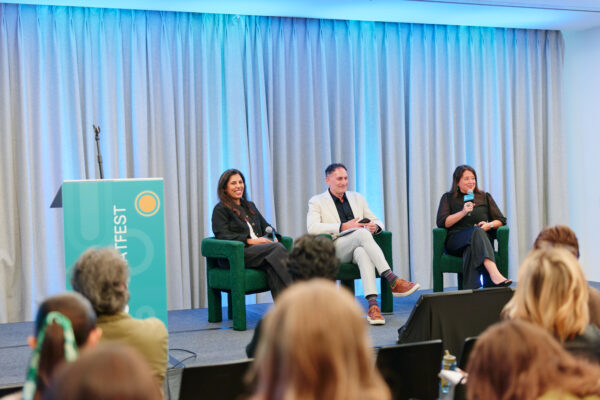
Andy Goldsmith’s conversation with Jess Collins of VCU Brandcenter and Shazzia Khan of Havas Health Network examined what emerging talent needs from agencies as work changes. Research, revision and feedback have helped people learn how to assess an idea. Leaders need to consider how that learning will evolve as tasks are automated.
Christopher Owens’s emphasis on teaching reinforced the point, explaining how the craft can deepen your own understanding while helping someone else build theirs.
The workshop agenda extended the conversation. Ann Marie Kerwin addressed becoming an upstream partner and Ethan Decker focused on teaching the C-suite. Carrie Riby and Lisa Sobilo addressed AI creativity, Ashwin Bhargava and Jonathan Petrino explored AI guardrails and Kate Rush Sheehy’s virtual workshop considered strategy departments for the future.
One attendee captured the immediate value: “I felt very empowered leaving StratFest and as an entry level strategist it gave me a lot to think about as I move forward in my career.”
Six takeaways for your team
- Agree what the idea needs to preserve. Use it to make feedback more useful.
- Test the hardest assumption early. Find out what could change the recommendation before investing in its execution.
- Map the decision to its outcome. Use limited experiments where they can provide useful evidence.
- Bring the right people in sooner. Give those responsible for delivery enough context to contribute to the direction.
- Check whether the process supports the objective. Review approvals and measurement alongside the creative opportunity.
- Give emerging talent decisions to practice. Ask people to explain their choices and offer feedback on their reasoning.
Part 3 follows these questions into two Jay Chiat Award-winning cases: With Love, Italy and Grubhub Snooze Insurance.
Get StratFest 2026 on-demand to explore these conversations with your team. ($99)
Already attended? Choose a replay and one working habit you want to reconsider. (Free to watch with your StratFest registration)
Related:
StratFest Sees Strategy at the Center of the Marketing Engine – Indie Agency News